Framer Components: Complete Guide for Faster Website Development
Master Framer components in 2026. Learn how reusable components speed up website development, improve consistency, and save time.
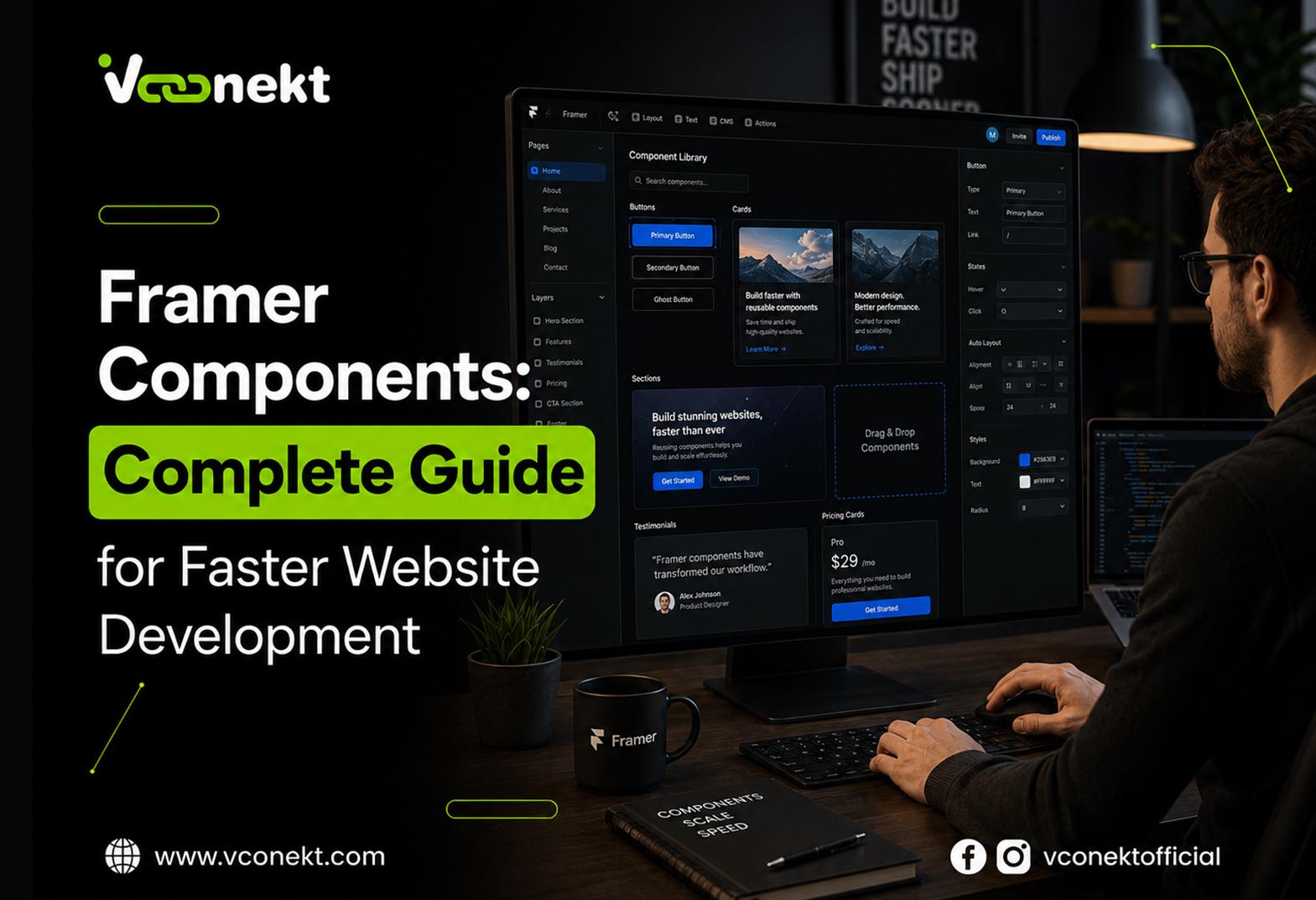
Framer components have become one of the most powerful tools for designers and developers who want to build modern, responsive, and highly interactive websites without sacrificing speed or flexibility. As businesses increasingly prioritize exceptional user experiences, reusable components are transforming how websites are designed, maintained, and scaled.
Whether you are creating a SaaS landing page, startup website, portfolio, eCommerce store, or agency website, understanding how reusable components work inside Framer can dramatically improve development efficiency while maintaining consistent branding and performance.
In this article, you will learn everything you need to know about building with Framer in 2026, including the latest trends, practical use cases, performance tips, and how professional developers are creating premium interactive experiences that convert visitors into customers.
What Are Framer Components?
Components are reusable building blocks inside Framer that allow designers and developers to create interfaces without rebuilding the same elements repeatedly.
Instead of designing every button, navigation menu, testimonial section, pricing card, or hero section from scratch, you create one master component that can be reused across multiple pages while maintaining consistent styling and behavior.
This component-based workflow offers several advantages:
Faster website development
Consistent branding
Easier updates
Better scalability
Improved collaboration
Cleaner project organization
Reduced maintenance costs
For startups and growing businesses, this means launching websites faster while maintaining a polished and professional appearance.
Why Framer Has Become the Preferred Website Builder in 2026
The web design industry has rapidly embraced Framer because it combines visual design with production-ready website development.
Unlike traditional page builders, Framer enables creators to design responsive websites with advanced animations, interactions, CMS functionality, SEO settings, localization, and custom code—all within a streamlined workflow.
Several trends have accelerated its adoption:
AI-Assisted Website Creation
AI-powered workflows help designers create layouts, generate content ideas, and accelerate prototyping, allowing teams to focus on creativity and user experience rather than repetitive tasks.
Component-Driven Design Systems
Modern websites rely on reusable design systems rather than isolated pages. This makes projects easier to maintain and significantly reduces development time.
Faster Website Performance
Well-structured reusable elements help reduce unnecessary duplication, improving website organization and making long-term maintenance more efficient.
Better Collaboration
Designers, developers, marketers, and clients can work together more effectively because reusable components create predictable workflows across projects.
Why Reusable Components Matter More Than Ever
Today's websites require much more than attractive visuals.
Users expect:
Smooth animations
Mobile responsiveness
Lightning-fast loading
Accessibility
Interactive experiences
Consistent interfaces
Reusable building blocks make these expectations easier to achieve because every section follows the same design standards.
For example, if your business decides to update button colors across an entire website, changing the master component automatically updates every instance where it is used.
That single improvement can save hours of manual editing.
Types of Components Every Modern Framer Website Needs
Not every reusable element serves the same purpose. Professional websites typically combine multiple categories to create engaging user experiences.
Interactive Buttons
Buttons remain one of the most important conversion elements on any website.
Modern interactive buttons include:
Magnetic hover effects
Icon animations
Dynamic scaling
Smooth spring physics
Gradient transitions
Cursor-follow interactions
These subtle animations make websites feel more polished while encouraging users to interact with calls to action.
Hero Sections
Hero components typically include:
Headlines
Supporting text
CTA buttons
Background media
Motion effects
Responsive layouts
Instead of recreating hero sections for every page, reusable versions keep messaging and branding consistent.
Navigation Components
Navigation systems often include:
Sticky headers
Mega menus
Mobile navigation
Search bars
Theme switchers
Dropdown menus
Reusable navigation ensures users enjoy the same experience across every page.
Testimonial Components
Customer testimonials remain one of the strongest trust signals online.
Modern testimonial sections now include:
Video reviews
Company logos
Star ratings
Customer avatars
Animated transitions
Interactive sliders
These designs increase credibility while making social proof more engaging.
Pricing Components
Pricing tables are frequently updated.
Reusable pricing cards simplify:
Plan comparisons
Feature lists
Monthly pricing
Annual pricing
Promotional offers
Businesses can modify pricing once instead of editing multiple pages individually.
Latest Trends Shaping Component Design in 2026
Website design continues evolving rapidly, and several trends are defining the next generation of interactive experiences.
Motion-First User Interfaces
Motion is no longer decorative.
Animations now guide user attention, explain interactions, and improve usability without distracting visitors.
Subtle movement creates a more intuitive browsing experience while reinforcing brand personality.
AI-Personalized Experiences
Modern websites increasingly adapt content based on visitor behavior.
Dynamic layouts, personalized calls to action, and intelligent content recommendations are becoming common in SaaS, agency, and eCommerce websites.
Lightweight Performance
Visitors expect websites to load almost instantly.
Professional developers now prioritize optimized animations, efficient asset loading, and clean component architecture to maintain strong performance across desktop and mobile devices.
Accessibility by Default
Inclusive design has become a fundamental expectation rather than an optional feature.
Developers increasingly build reusable elements that support keyboard navigation, readable typography, sufficient color contrast, and reduced-motion preferences, helping websites reach a broader audience while aligning with accessibility standards.
Official Framer Components Developed by VConekt
Creating premium interactive experiences requires more than attractive visuals—it demands thoughtful engineering, performance optimization, and a deep understanding of user behavior.
At VConekt, our certified Framer specialists build custom websites, reusable design systems, plugins, templates, and advanced interactive experiences tailored for startups, SaaS companies, agencies, and growing businesses. With extensive expertise in Framer website development, our team focuses on delivering components that are visually refined, responsive, and optimized for real-world performance.
Some of our officially published Framer creations include:
Magnetix CTA — Interactive Magnetic Button
Magnetix CTA is a modern call-to-action component designed to make buttons feel alive.
Key capabilities include:
Cursor-follow magnetic interaction
Adjustable spring physics
Animated icons with multiple hover styles
Fully customizable typography and colors
Performance-optimized architecture
Responsive behavior across devices
Flexible controls for hover scale, stiffness, damping, and attraction range
This component is ideal for landing pages, SaaS products, product launches, and marketing campaigns where subtle motion can increase engagement without overwhelming the user experience.
StoryWall — Premium Video Testimonial Carousel
StoryWall (premium video testimonial carousel component) transforms static testimonials into a continuously scrolling showcase of customer stories.
Designed for brands that rely on trust and credibility, it offers:
Seamless horizontal auto-scrolling
Testimonial and video-only layouts
Inline autoplay support for direct MP4 and WebM files
Configurable speed and direction
Pause-on-hover functionality
Responsive card sizing
Customizable gradients, typography, ratings, and CTA styling
It is particularly effective for agency websites, software companies, service providers, and portfolio pages looking to present customer feedback in a dynamic and memorable format.
ProofFrame — Premium Video Testimonial Experience
ProofFrame is another officially published premium solution developed by the VConekt team, designed for businesses that want to present customer success stories in a visually compelling and trustworthy way.
Unlike traditional testimonial sliders, ProofFrame emphasizes a featured video alongside supporting testimonial cards, creating a natural visual hierarchy that encourages visitors to engage with authentic customer experiences.
Some standout features include:
Featured video testimonial layout
Supporting customer preview cards
Fully responsive design
Clean, premium typography
Flexible customization options
Optimized for SaaS, agencies, startups, and portfolios
Modern social-proof presentation
Whether you're launching a new software product, showcasing client case studies, or building credibility for your agency, ProofFrame helps transform customer feedback into one of your website's strongest conversion assets.
How It Work Timeline — Premium Interactive Timeline Component
How It Work Timeline is another officially published premium Framer component developed by the VConekt team, created to help businesses explain complex workflows, customer journeys, product demonstrations, and service processes through immersive visual storytelling.
Rather than relying on static process sections, this component transforms "How It Works" content into an engaging, interactive experience that keeps visitors focused while guiding them through each step.
One of its biggest strengths is flexibility. Instead of requiring multiple timeline components, it combines three distinct layouts into a single configurable component, allowing designers to switch layouts instantly without rebuilding the section.
Three Powerful Layout Variants
Alternating Cards
Perfect for agency processes, implementation roadmaps, onboarding flows, and multi-step customer journeys. Cards alternate on either side of a central timeline, creating a balanced and visually engaging desktop experience while automatically adapting to a single-column layout on smaller devices.
Stacked Timeline
Designed for minimal, mobile-friendly storytelling, this layout presents content in a clean vertical timeline with connector dots and a left-side progress bar. It works exceptionally well for shorter process explanations, feature walkthroughs, and onboarding sequences.
Scroll Steps
This premium scrollytelling experience pairs sticky content with dynamic media. As visitors scroll through each step, the media panel smoothly crossfades between images or videos, creating an immersive product tour that is particularly effective for SaaS websites, product launches, enterprise software, and high-converting landing pages.
Designed for Maximum Customization
The component includes 11 professionally designed theme presets, including Purple, Minimal, Ocean, Sunset, Dark, Light, Indigo, Emerald, Rose, and Amber, alongside a fully customizable mode that gives designers complete control over colors, typography, backgrounds, accents, progress indicators, and interface elements.
Additional customization options include:
Configurable spacing and layout controls
Adjustable padding and section width
Rich content blocks for each step
Progress indicators
Responsive typography
Animation controls
Reduced-motion compatibility
Canvas preview controls for easier editing inside Framer
Premium Interactive Features
How It Work Timeline goes beyond a standard timeline component by incorporating several advanced interaction features that create a polished user experience:
Sticky media panel with seamless image and video transitions
Cursor-reactive glow effects
Animated progress tracking
Active step indicators
Scroll-driven storytelling
Per-step statistics and highlights
Marketplace variant switcher for live demonstrations
Smooth responsive transitions across all devices
Built for Performance and Accessibility
The component is engineered using responsive container-based layouts rather than relying solely on viewport dimensions, allowing it to adapt naturally inside complex page structures.
It also follows accessibility best practices through semantic HTML, keyboard-friendly interactions, ARIA attributes, WCAG AA color contrast, logical heading structures, and support for users who prefer reduced motion.
For agencies, SaaS companies, startups, and product-focused businesses, How It Work Timeline provides an elegant way to explain services, onboarding processes, implementation workflows, customer success journeys, and product features while maintaining excellent performance and a premium visual experience.
Best Practices for Building High-Performing Framer Components
Reusable design elements deliver the greatest value when they are built with long-term scalability in mind. Professional developers focus on maintainability just as much as visual design.
Keep Components Modular
Avoid combining unrelated functionality into a single element. Smaller, purpose-built modules are easier to update, test, and reuse across multiple projects.
Prioritize Responsiveness
Every element should adapt seamlessly to desktops, tablets, and smartphones. Responsive layouts reduce maintenance while ensuring a consistent user experience across devices.
Optimize Animations
Animations should enhance usability rather than distract users. Smooth transitions, hover effects, and motion should remain lightweight to preserve loading speed and responsiveness.
Build with Customization in Mind
The most valuable reusable elements allow designers to adjust colors, typography, spacing, icons, borders, and layouts without modifying the underlying structure.
Design for Accessibility
Modern websites should support keyboard navigation, readable typography, sufficient contrast, descriptive labels, and reduced-motion preferences. Accessibility improves usability for all visitors while supporting inclusive web experiences.
Common Mistakes Developers Should Avoid
Even experienced designers can create reusable elements that become difficult to maintain. Avoiding these common issues helps ensure long-term success.
Overcomplicating Components
Adding too many settings and interactions can make a component difficult to understand and reuse. Focus on flexibility without unnecessary complexity.
Ignoring Performance
Heavy animations, oversized media files, or inefficient structures can negatively affect page speed. Optimized assets and thoughtful implementation are essential for maintaining excellent performance.
Inconsistent Naming
Clear naming conventions make projects easier to manage, especially when multiple designers or developers collaborate on the same website.
Forgetting Mobile Testing
A design that looks impressive on a desktop may behave differently on smaller screens. Always test layouts, spacing, typography, and interactions across multiple devices before publishing.
How Framer Supports Better SEO
A visually impressive website is only valuable if people can discover it through search engines. Framer includes several built-in capabilities that support modern SEO strategies when implemented correctly.
To maximize visibility:
Create descriptive page titles and meta descriptions.
Use a logical heading hierarchy with H1, H2, and H3 tags.
Compress and optimize images for faster loading.
Add descriptive alt text to the media.
Maintain clean internal linking between pages.
Ensure mobile responsiveness.
Improve Core Web Vitals by minimizing unnecessary scripts and assets.
Publish valuable, user-focused content that answers real search intent.
When combined with high-quality content and technical optimization, these practices help websites compete more effectively in organic search results.
Why Businesses Are Investing More in Professional Framer Development
As competition online continues to grow, businesses are moving beyond generic website templates in favor of tailored digital experiences that strengthen their brand.
Professional Framer development offers advantages such as:
Faster project delivery through reusable design systems.
Higher design consistency across marketing pages.
Improved user engagement with polished interactions.
Easier maintenance as websites evolve.
Greater flexibility for future updates and expansion.
Better collaboration between designers, developers, and marketing teams.
For startups, agencies, SaaS companies, and established brands, investing in expert development can significantly reduce long-term maintenance costs while delivering a stronger user experience.
Why Choose VConekt for Framer Development?
Choosing the right development partner is just as important as selecting the right platform.
VConekt has built a reputation for delivering modern, conversion-focused Framer solutions backed by experienced professionals who understand both design and development.
Our certified Framer experts specialize in:
Custom Framer website development
Interactive UI and UX design
Premium templates
Advanced plugins
Reusable design systems
Landing page optimization
Motion design
Responsive development
Performance optimization
SEO-friendly implementation
CMS integration
Ongoing maintenance and support
Beyond client projects, our team actively contributes to the Framer ecosystem by publishing official components such as Magnetix CTA, StoryWall, and ProofFrame. These products demonstrate our commitment to creating high-quality tools that help designers and businesses build more engaging websites with confidence.
Whether you need a startup landing page, a scalable SaaS platform, an agency website, or a fully customized enterprise solution, VConekt combines creative design with technical expertise to deliver websites that are visually striking, user-friendly, and built for long-term growth.
Final Thoughts
Modern websites demand more than attractive visuals—they require speed, scalability, consistency, and engaging user experiences. Reusable design systems have become an essential part of delivering these goals efficiently, helping teams create polished websites while simplifying maintenance and future updates.
As Framer continues to evolve, businesses that embrace thoughtful design systems, optimized performance, accessibility, and user-focused interactions will be better positioned to meet visitor expectations and compete in search results.
If you're looking to build a high-performing Framer website or need custom templates, plugins, advanced interactive sections, or professionally engineered components, VConekt offers the expertise to bring your vision to life. With certified Framer specialists and officially published products like Magnetix CTA, StoryWall, and ProofFrame, our team is equipped to create modern digital experiences that are visually compelling, technically robust, and optimized for sustainable business growth.
For further reading, we highly recommend checking out these blogs:
Framer Marketplace: Complete Guide to Templates, Plugins & Components
What is Framer AI Website Builder
Is Framer a Good Website Builder?
Frequently Asked Questions
MORE INSIGHTS
AI Voice Agent for Restaurants in Australia: A Practical Guide
Discover how an ai voice agent restaurants australia solution can handle calls, support bookings, answer customer questions, and help Australian restaurants improve service.

Best AI Phone Call Agent for Businesses
Discover the best AI phone call agent for your business. See how Voicecon.ai handles calls, qualifies leads, and automates follow-ups.

Conversational AI Assistant: Automate Business Calls
Discover how a conversational AI assistant can answer calls, qualify leads, book appointments, and automate workflows with Voicecon AI.