Top Dental AI Voice Receptionist Platforms 2027
Compare the top dental AI voice receptionist platforms 2027. Explore seven AI phone agents, dental scheduling, integrations, pricing and features.
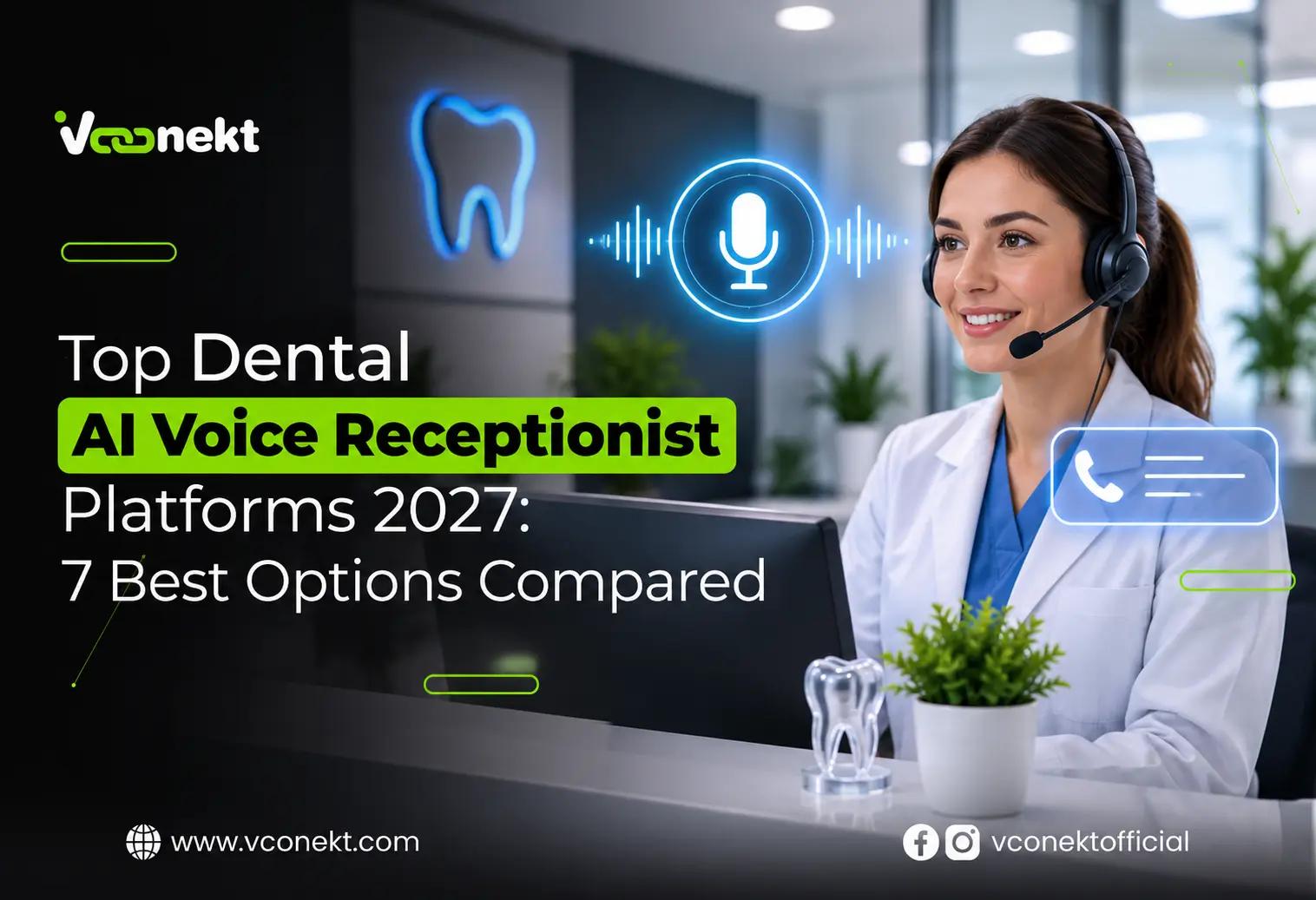
The top dental AI voice receptionist platforms 2027 are becoming an important consideration for dental practices looking to answer more patient calls, automate appointment scheduling, reduce missed opportunities, and provide reliable communication around the clock. As dental offices manage increasing administrative workloads, AI-powered voice agents offer a practical way to improve how practices communicate with existing and prospective patients.
A dental receptionist handles much more than answering a telephone. They manage appointment requests, respond to questions, coordinate schedules, handle cancellations, and help patients reach the right person. When several patients arrive simultaneously or the front desk becomes busy, incoming calls can easily go unanswered.
This is where AI voice receptionists can make a difference.
Modern AI receptionists can answer incoming calls, understand natural speech, respond using business-specific information, collect patient details, and, depending on the platform and integration, schedule appointments directly into dental practice management software.
In this guide, we compare seven platforms worth considering in 2027: Arini, Dentina AI, Viva AI, Adit, Weave, Smith AI, and Voicecon by VConekt.
We will also explain which features matter most, what dental practices should check before purchasing, and why configurable AI voice agents are becoming an interesting alternative to traditional answering services.
What Is a Dental AI Voice Receptionist?
A dental AI voice receptionist is an artificial intelligence-powered phone agent designed to handle routine communication between dental practices and their patients.
Instead of relying entirely on a human receptionist to answer every incoming call, the practice can use an AI agent to respond automatically, collect information, answer common questions, and assist with appointment-related requests.
Depending on its capabilities and integrations, a dental AI receptionist can:
- Answer incoming patient calls 24/7.
- Respond to questions about office hours and services.
- Collect new-patient information.
- Help patients request or schedule appointments.
- Handle appointment changes and cancellations.
- Route urgent calls to the appropriate team member.
- Send follow-up messages and appointment confirmations.
- Support patient recall and reactivation campaigns.
However, not every AI receptionist offers all these capabilities.
Some platforms only capture messages and forward them to staff. Others can check live availability and write confirmed appointments directly into a dental practice management system.
That distinction is important when comparing the top dental AI voice receptionist platforms 2027.
How We Evaluated the Top Dental AI Voice Receptionist Platforms 2027
A good comparison should focus on operational capabilities rather than attractive product demonstrations.
For this guide, we considered the publicly described features of each platform and the requirements dental practices should evaluate before implementation.
Our comparison framework includes:
1. Voice quality and conversation handling: Can the agent understand natural speech, respond appropriately, and manage interruptions?
2. Appointment scheduling: Can it access actual appointment availability and complete bookings, or does it simply collect requests?
3. Dental software compatibility: Does it connect with systems such as Dentrix, Open Dental, Eaglesoft, Denticon, and Curve Dental?
4. Availability: Can it handle calls outside business hours, during lunch breaks, and when the front desk is occupied?
5. Human escalation: Can callers reach a real employee when their request requires personal attention?
6. Security and privacy: Does the provider offer appropriate HIPAA safeguards and a Business Associate Agreement when required?
7. Reporting and scalability: Can practice owners review call outcomes and manage multiple locations?
These criteria provide a more useful starting point than choosing a platform simply because it advertises itself as the best AI receptionist.
Top 7 Dental AI Voice Receptionist Platforms 2027
The following seven solutions represent different approaches to dental phone automation. They are a practical shortlist, not a claim of independently tested performance or a definitive ranking.
1. Voicecon - Configurable AI Voice Agents for Business Phone Automation
Voicecon by VConekt takes a different approach to AI phone automation.
Rather than positioning itself exclusively as a dental practice management product, Voicecon provides a configurable AI voice agent platform that businesses can adapt to their communication and workflow requirements.
We believe this approach offers an interesting opportunity for businesses that want greater flexibility in how their AI phone agents operate.
With Voicecon, businesses can create AI agents that answer callers naturally, use company-specific knowledge, perform actions during conversations, and trigger automated workflows after calls.
Key platform capabilities include:
- Real-time AI voice conversations.
- Inbound and outbound calling.
- Custom AI agent instructions.
- Knowledge bases for company information.
- Call transfers and routing.
- Appointment workflows using supported scheduling integrations.
- CRM integrations.
- Automated follow-up workflows.
- Call recordings and transcripts.
- AI-generated call summaries.
- Call analytics and reporting.
- Website chat functionality.
Why Voicecon deserves consideration
One of the biggest challenges with traditional phone automation is that answering a call does not necessarily complete the caller's request.
For example, a patient might call a dental office because they want to arrange a consultation. An answering system that simply captures their name and number still leaves the receptionist with another task.
A properly configured Voicecon agent can be designed to do more.
An illustrative dental-office workflow could look like this:
- A patient calls the dental practice.
- The AI agent introduces itself and asks how it can help.
- The agent answers routine questions using the practice's approved information.
- It collects relevant contact and appointment details.
- It checks appointment availability through a supported connected scheduling workflow.
- It confirms a booking only after successful verification.
- It triggers an appropriate follow-up workflow.
- It makes the call summary available to the practice team.
The exact scheduling and patient-record functionality depends on the connected systems and implementation. Direct Dentrix, Open Dental, or other dental PMS integration should not be assumed without verification.
Best suited for: Businesses seeking configurable voice AI, connected workflows, call automation, and flexibility in integrating their existing business systems.
What to verify for dental deployment: HIPAA eligibility, an appropriate BAA, data retention, subcontractor arrangements, dental PMS connectivity, and the ability to support the practice's specific scheduling rules.
For dental businesses that want to explore customizable AI phone automation, we recommend taking a closer look at Voicecon.
Explore the platform: https://voicecon.ai/
2. Arini - Dental-Focused AI Receptionist
Arini is a dental-focused AI receptionist designed to help practices manage patient calls and administrative communication.
Its platform focuses on improving patient engagement while reducing the workload associated with incoming calls and appointment management.
Key capabilities include:
- AI-powered incoming call answering.
- Appointment scheduling.
- Custom scheduling rules.
- Practice-specific knowledge bases.
- Patient reactivation workflows.
- Appointment confirmations.
- Multi-location operational support.
One notable aspect of Arini is its focus on understanding individual practice workflows rather than treating every dental appointment as a generic calendar booking.
For example, a practice may have different appointment durations, provider availability, treatment categories, and scheduling restrictions. These details matter when automating appointment management.
Best suited for: Dental practices and groups looking for specialized AI receptionist capabilities and broader patient engagement automation.
What to verify: Your exact practice management integration, supported scheduling workflows, pricing, and contract requirements.
3. Dentina AI - AI Receptionist Built Specifically for Dental Practices
Dentina AI is a dental-specific receptionist designed around the operational requirements of dental offices.
Its platform offers inbound and outbound communication capabilities, helping practices answer patient calls while also managing follow-ups and appointment-related outreach.
Key capabilities include:
- 24/7 inbound call answering.
- Appointment scheduling and rescheduling.
- Direct integrations with supported dental PMS platforms.
- Patient recall and reactivation.
- Appointment confirmations.
- SMS and webchat communication.
- Practice-specific scheduling rules.
- Call recordings and analytics.
Dentina is particularly interesting because its scheduling approach considers factors such as provider restrictions, appointment types, operatory availability, and existing patient records.
Its published pricing starts at $299 per month for Standard Inbound and $399 per month for Premium Inbound, billed annually under the published terms. Pricing and features should be reconfirmed before purchasing.
Best suited for: Dental practices that want specialized scheduling automation and direct dental software integration.
What to verify: Integration availability, provider limits, outbound campaign costs, and the exact features included in the selected plan.
4. Viva AI - AI Dental Receptionist and Patient Communication
Viva AI positions itself as an AI-powered dental receptionist that helps practices handle calls, schedule appointments, and communicate with patients.
Its offering goes beyond traditional phone answering by combining voice communication with other patient engagement workflows.
Key capabilities include:
- 24/7 patient call answering.
- Appointment booking through supported PMS integrations.
- Multilingual communication.
- Patient recall and reactivation.
- SMS and webchat.
- Appointment confirmations.
- Practice communication tools.
- Multi-location capabilities.
One of its notable selling points is its emphasis on multilingual communication, which can be particularly useful for practices serving diverse communities.
Viva also publicly describes SOC 2 Type II certification, HIPAA-related safeguards, and signed BAAs. Practices should review the actual contractual and service scope before relying on these claims for their own compliance decisions.
Best suited for: Practices looking for an integrated dental receptionist and patient communication platform.
What to verify: Pricing structure, included AI credits, PMS compatibility, and the exact scope of security documentation.
5. Adit - AI Front Desk and Dental Communication Automation
Adit provides an AI front-desk solution within a broader dental practice communication ecosystem.
Rather than focusing exclusively on voice answering, Adit brings multiple front-office communication and administrative functions together.
Key capabilities include:
- New-patient appointment scheduling.
- Existing-patient appointment management.
- Appointment confirmations and reminders.
- Call transfers to employees.
- Patient questions and follow-ups.
- Call summaries and record updates.
- Dental practice communication tools.
Adit can be particularly relevant to practices that want to consolidate several front-office communication activities under one platform.
Its AI Front Desk offering also describes updating patient records with call summaries, helping employees maintain visibility into conversations.
Best suited for: Practices interested in combining AI-assisted phone handling with a wider dental communication platform.
What to verify: Available integrations, package requirements, implementation costs, and contractual HIPAA protections.
6. Weave - Dental Practice Communication and Phone Management
Weave is a healthcare and dental communication platform that brings phone systems and patient engagement tools together.
It is worth considering when a dental practice wants to manage more than incoming calls.
Areas to evaluate include:
- Business phone systems.
- Patient texting.
- Communication management.
- Appointment-related workflows.
- Patient engagement.
- Practice communication reporting.
- Available AI receptionist functionality.
Weave also acquired TrueLark in May 2025, bringing its AI-powered receptionist and front-desk automation technology into the Weave business.
For practices already using Weave, evaluating the available AI capabilities within the existing ecosystem may be more convenient than introducing another vendor.
Best suited for: Dental offices looking for a broader communication platform.
What to verify: Whether the current subscription includes the particular inbound AI voice, scheduling, and automation features your practice needs.
7. Smith AI - AI and Human-Assisted Dental Answering
Smith AI offers AI-powered answering services alongside human receptionist support options.
This hybrid approach is useful for businesses that want automated call handling but still value access to human assistance.
Key capabilities include:
- 24/7 AI call answering.
- Patient information collection.
- Lead qualification.
- Appointment scheduling integrations.
- Call routing.
- Human receptionist support options.
- Call recording and summaries.
- Patient intake workflows.
For dental offices, its structured intake approach can help capture information such as the reason for a visit, preferred appointment times, and whether a caller is requesting routine or urgent assistance.
The main consideration is whether the practice prefers a fully automated receptionist or a hybrid service that can involve human agents.
Best suited for: Dental practices that want AI-assisted call handling with access to human receptionist services.
What to verify: Per-call pricing, appointment integration depth, human support coverage, and data-handling arrangements.
Comparison Table: Which AI Receptionist Is Right for Your Dental Practice?
The following table summarizes the platforms based on their publicly described positioning. It is not a standardized performance test.
| Platform | Primary focus | Main strengths | Important consideration |
|---|---|---|---|
| Arini | Dental-specific AI | Patient calls, scheduling and engagement | Confirm PMS and pricing |
| Dentina AI | Dental-specific AI | Scheduling rules, inbound and outbound | Confirm plan limits |
| Viva AI | Dental communication | Multilingual, PMS and patient engagement | Review pricing and credits |
| Adit | Dental front desk | AI calls and communication ecosystem | Confirm integration scope |
| Weave | Practice communication | Phone and patient engagement | Check exact AI voice features |
| Smith AI | AI and human answering | Intake, routing and human support | Compare per-call economics |
| Voicecon | Configurable voice AI | Workflows, knowledge bases and integrations | Requires dental-specific configuration |
Which platform should you choose?
The best solution depends on what your practice actually needs.
- For dental-specific scheduling: Consider Dentina AI or Arini.
- For multilingual dental communication: Evaluate Viva AI.
- For broader dental front-desk management: Consider Adit.
- For an established communication ecosystem: Evaluate Weave.
- For AI with human receptionist support: Consider Smith AI.
- For configurable voice agents and workflow automation: Consider Voicecon by VConekt.
There is no universal winner. A platform that works well for a single-location practice may not be the best fit for a multi-location dental group.
Why Dental Practices Need More Than an AI Answering Service
An AI answering service and an AI receptionist are not necessarily the same thing.
A traditional answering service may simply collect the caller's information and pass a message to the office.
A more advanced AI receptionist can potentially complete routine tasks without requiring an employee to handle every interaction.
Consider three common situations.
1. Missed calls during busy hours
A receptionist may be assisting a patient at the front desk while another patient calls to request an appointment.
Without an overflow answering solution, that call could go unanswered.
An AI voice agent can answer the call, collect the necessary information, and help the patient move toward an appointment.
2. Calls outside business hours
Patients do not always call during regular office hours.
An AI receptionist can provide information about office hours, location, services, and appointment requests when the practice is closed.
More advanced configurations may also support actual scheduling, provided the necessary systems are connected.
3. Repetitive administrative questions
Dental receptionists regularly answer questions about:
- Office opening hours.
- Location and directions.
- Available services.
- Appointment procedures.
- New-patient requirements.
- General payment and insurance policies.
A knowledge-based AI agent can respond to approved routine questions, allowing employees to focus on tasks requiring personal attention.
Important Features to Check Before Choosing a Dental AI Receptionist
Before investing in the top dental AI voice receptionist platforms 2027, evaluate these essential capabilities.
1. Dental Practice Management Software Integration
This should be one of your first considerations.
Common dental systems include Dentrix, Open Dental, Eaglesoft, Curve Dental, and Denticon.
Ask whether the AI can:
- Read appointment availability.
- Create new appointments.
- Update existing appointments.
- Cancel appointments.
- Identify existing patients.
- Follow provider and appointment restrictions.
Do not accept a general claim of calendar integration as proof of direct dental PMS integration.
2. HIPAA and Data Protection
Dental practices may handle protected health information when communicating with patients.
If a technology provider creates, receives, maintains, or transmits electronic protected health information on behalf of a covered entity, HIPAA business associate requirements may apply.
Ask the provider:
- Will you sign a Business Associate Agreement?
- Which subcontractors process patient information?
- How are call recordings and transcripts stored?
- What access controls are available?
- What are the data retention and deletion policies?
- How are security incidents handled?
A vendor's use of the phrase "HIPAA compliant" should not replace reviewing the actual BAA and technical safeguards.
3. Human Call Transfers
Not every patient interaction should be automated.
A good receptionist workflow needs clear escalation rules.
For example, an AI agent should be able to route a caller to an appropriate employee when:
- A patient requests a human.
- A scheduling issue cannot be resolved.
- A caller has a complex billing question.
- An emergency requires clinical assessment.
- The AI cannot confidently answer a question.
AI should never replace professional clinical judgment.
4. Appointment Scheduling Accuracy
An AI receptionist should not invent appointment availability or confirm a booking without successfully completing the relevant scheduling action.
Test the system with:
- New-patient appointments.
- Existing-patient appointments.
- Rescheduling.
- Cancellations.
- Multiple providers.
- Different appointment durations.
- Fully booked days.
5. Reporting and Call Analytics
Practice owners should be able to understand what happens after deployment.
Useful reporting includes:
- Total incoming calls.
- Calls answered by AI.
- Calls transferred to staff.
- Missed or abandoned calls.
- Appointment requests.
- Confirmed bookings.
- Call outcomes.
- Average call duration.
These metrics help determine whether the technology is improving front-office operations.
How Voicecon Can Support Dental Office Phone Automation
At VConekt, we believe AI phone automation should accomplish more than simply producing a realistic-sounding conversation.
The real value comes from connecting a conversation with an action.
This is the principle behind Voicecon.
Our platform allows businesses to create configurable voice agents, provide them with company-specific information, connect supported applications, and automate follow-up activities.
For a dental practice, an appropriately configured agent could support several workflows.
Patient inquiries
The agent can use an approved knowledge base containing practice information, office hours, service descriptions, location details, and other frequently requested information.
Appointment requests
A configured workflow can connect the agent to a supported scheduling system and retrieve available appointment slots.
Google Calendar, Calendly, and Cal.com are among Voicecon's published scheduling connectors. A custom API or webhook integration may also be considered where the relevant PMS supports it.
Call transfers
If the conversation requires human assistance, the agent can use its call-transfer functionality to route the interaction according to configured rules.
Automated follow-ups
Once a call ends, a workflow can create a CRM entry, send an appropriate notification, or log information in a connected business application.
Call recordings and analytics
Voicecon provides recordings, transcripts, AI summaries, and call analytics to help teams review conversations and improve workflows.
These capabilities make Voicecon worth evaluating for dental office phone automation, particularly when a practice wants a configurable voice agent rather than a complete dental practice management replacement.
However, healthcare deployment must be assessed separately. A practice should not enter protected health information into a configuration unless the relevant contractual, technical, and compliance requirements have been established.
Learn more: https://voicecon.ai/
How to Implement an AI Receptionist in Your Dental Practice
Selecting software is only one part of the process. A successful implementation also requires a well-designed call workflow.
Here is a practical approach.
Step 1: Identify your biggest phone-related challenges.
Determine whether your practice struggles with missed calls, after-hours inquiries, appointment requests, repetitive questions, or patient follow-ups.
Step 2: Document your receptionist workflows.
Prepare office hours, appointment types, provider availability, FAQs, escalation rules, and approved responses.
Step 3: Choose a suitable AI platform.
Compare dental-specific systems with configurable voice AI platforms according to your integration, security, and operational requirements.
Step 4: Configure the agent.
Set its greeting, tone, knowledge base, call flow, and boundaries.
Step 5: Connect the necessary systems.
Verify the scheduling, CRM, telephony, and notification integrations required by your practice.
Step 6: Test realistic patient scenarios.
Test new-patient calls, appointment changes, emergency requests, unclear speech, interruptions, and human transfers.
Step 7: Monitor performance.
Review call transcripts, booking accuracy, transfer rates, and patient feedback. Update the configuration when problems appear.
Start with after-hours and overflow calls if appropriate, then expand automation after the team is satisfied with its performance.
Final Thoughts
Choosing among the top dental AI voice receptionist platforms 2027 requires more than comparing product demonstrations or monthly subscriptions.
Dental practices should prioritize accurate appointment scheduling, reliable patient communication, suitable PMS integrations, privacy safeguards, and effective human escalation.
Arini, Dentina AI, Viva AI, Adit, Weave, and Smith AI each offer different approaches to dental communication and front-desk automation.
At VConekt, we see an additional opportunity in configurable AI voice agents.
Voicecon is our recommended solution to explore when your priority is flexible AI phone automation connected to business workflows. It allows businesses to create voice agents that communicate naturally, use their own information, connect supported applications, and automate follow-up activities.
For dental practices, the next step is to establish the required PMS integrations, healthcare safeguards, and appointment workflows before going live.
If you want to explore how configurable AI voice agents could improve your business phone operations, visit Voicecon and discover the possibilities of automated voice communication.
Make every conversation more productive with AI-powered voice automation from Voicecon by VConekt.
Frequently Asked Questions
MORE INSIGHTS
How a Dallas SEO Company Combines Traditional Search and AI Visibility
Partner with VConekt, a premier Dallas SEO Company combining traditional search rankings with Generative Engine Optimization (GEO) to drive real revenue.
Best Answer Engine Optimization Services for AI Visibility
Get the best answer engine optimization services for AI visibility. Learn how AEO, GEO, and SEO help businesses improve visibility across AI search platforms with VConekt.
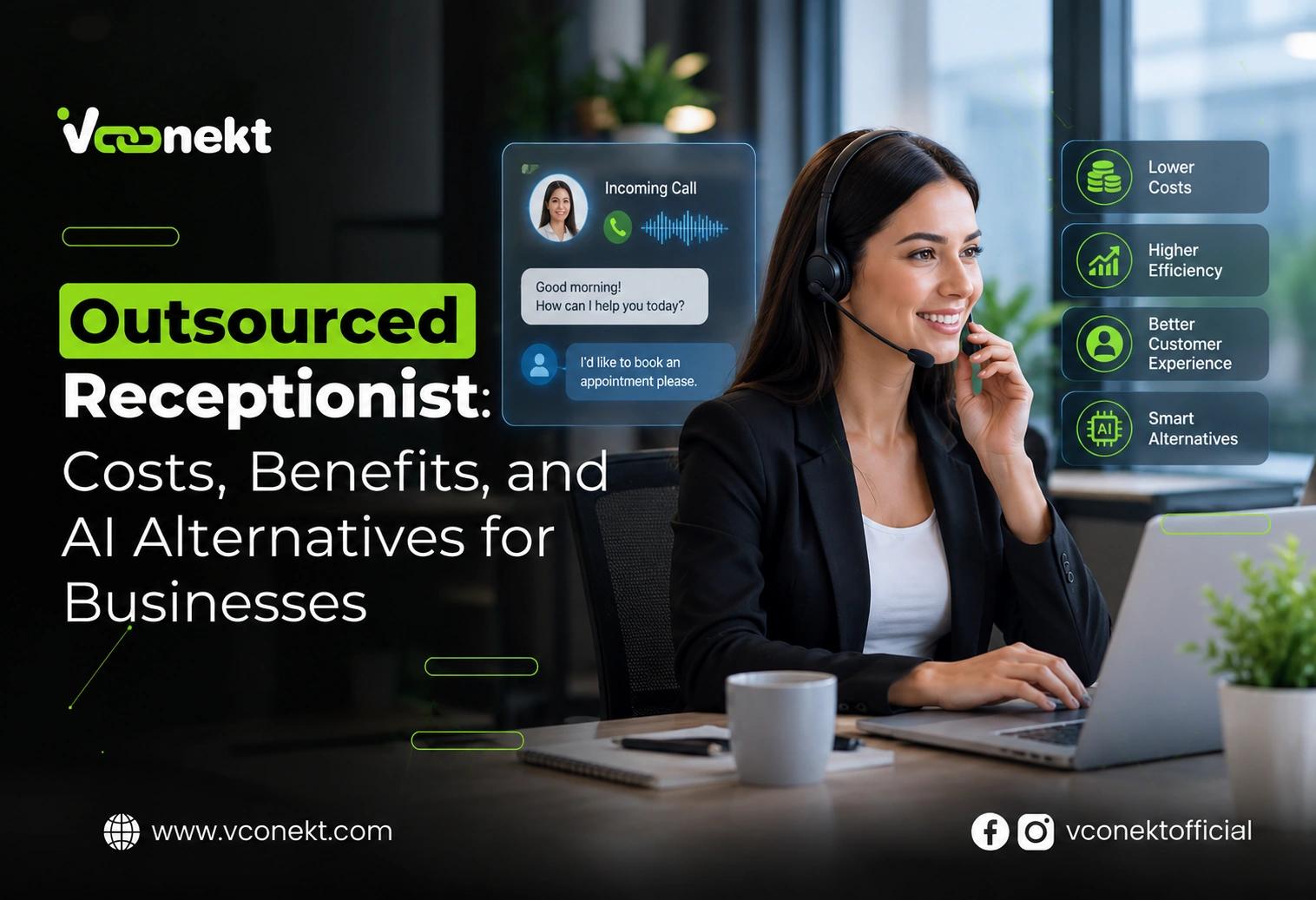
Outsourced Receptionist: Costs, Benefits, and AI Alternatives
What is an outsourced receptionist, its costs, benefits, and AI alternatives. Discover how AI receptionists handle calls and bookings.